

Introduction
For more than a century, the history of Deep Run Mennonite Church has been shaped by the development of the Old and New churches, which came to be known as Deep Run East and Deep Run West Mennonite Churches.
The Mennonite congregation at Deep Run, Bedminster Township, is one of the oldest Mennonite congregations in Bucks County, Pennsylvania. For nearly three centuries, it has been a place of worship, fellowship, and faithful service. The timeline below traces the congregation's history—from the construction of its first meetinghouse in 1746 through its ministers, worship practices, burial ground, the 1847 division, and the formation of the new society at Deep Run.
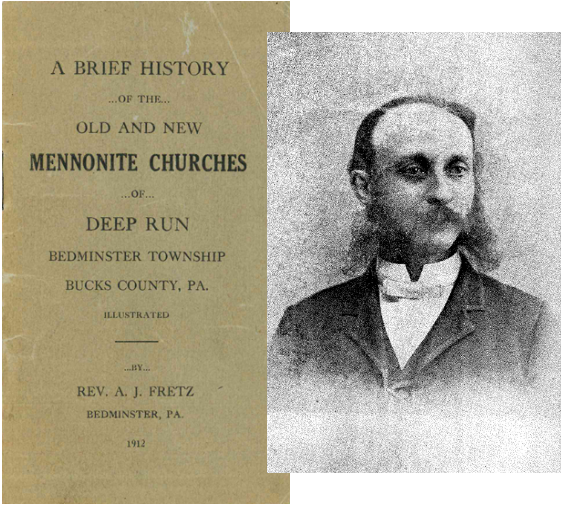
The historical information presented here is drawn from A Brief History of the Old and New Mennonite Churches of Deep Run, written by Rev. A. J. Fretz and published in 1912.

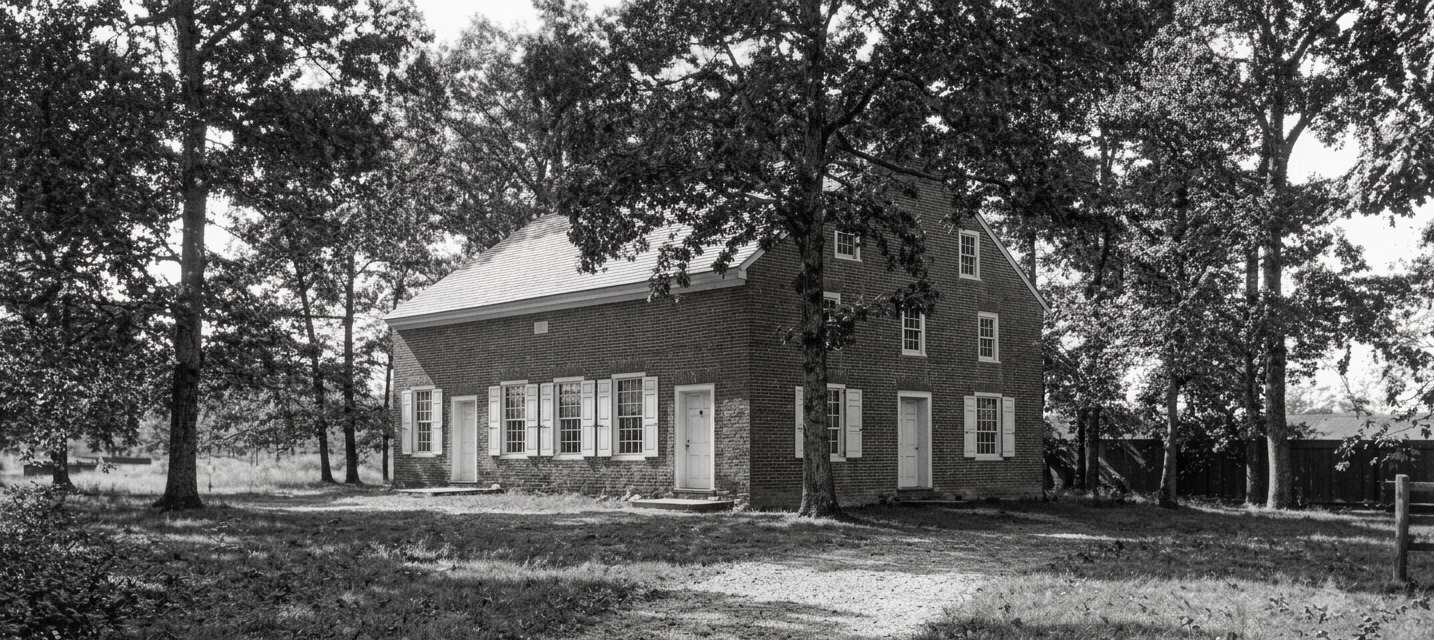
Old Mennonite Church, Deep Run, Bedminster, PA Built 1766, torn down 1872
Origins and Early Meeting Houses
William Allen presented the Society with the land, comprising a farm of fifty acres adjoining. The deed bearing the date of March 24th, 1746, was executed in trust to Abraham Swartz, Hans Friedt, Samuel Kolbe, and Marcus Oberholtzer, bishops and a deacon of the church.
The first house of worship was built of logs, about the year 1746, which was succeeded by a stone structure 35 x 58 feet in the year 1766. The stone church was rebuilt or repaired in 1794. In 1872, after standing 106 years, it was torn down and the present building erected in its place.
Ministers and Deacons of the Old Congregation
Ministers listed in order: Abraham Gross, Abraham Wismer, Abraham Oberholtzer, Daniel Landis, Christian Gross, Abraham Kulp, Abraham Godshalk, Abraham Meyers, Isaac Meyer, Samuel Godshall, John Gross, John Leatherman, Jacob M. Rush, William G. Gross, and Enos B. Wismer.
Deacons listed for the same period: Henry Meyers, Joseph Nash, Abraham Fretz, Abraham Wismer, Samuel Shelly, Jacob Oberholtzer, Abraham Meyers, Henry Shelly, John L. Derstine, and Joseph B. Oberholt.Description goes here
1746
Church Founded
William Allen deeded land to the congregation, and the first log meetinghouse was built.
1766
Stone Meetinghouse Built
The original log meetinghouse was replaced with a stone building.
1794
Stone Church Rebuilt
The stone church was rebuilt or underwent significant repairs.
1847
Congregational Division
A division affected the Deep Run congregation and other Mennonite congregations in eastern Pennsylvania.
1848–1849
New Society Organized
The new society was organized and received its charter of incorporation.
1849
Brick Meetinghouse Dedicated
A new brick meetinghouse was built and consecrated.
1872
Church Replaced
The old stone church was removed and replaced with a new building.
1911
English Worship Adopted
English became the exclusive language used for public worship.
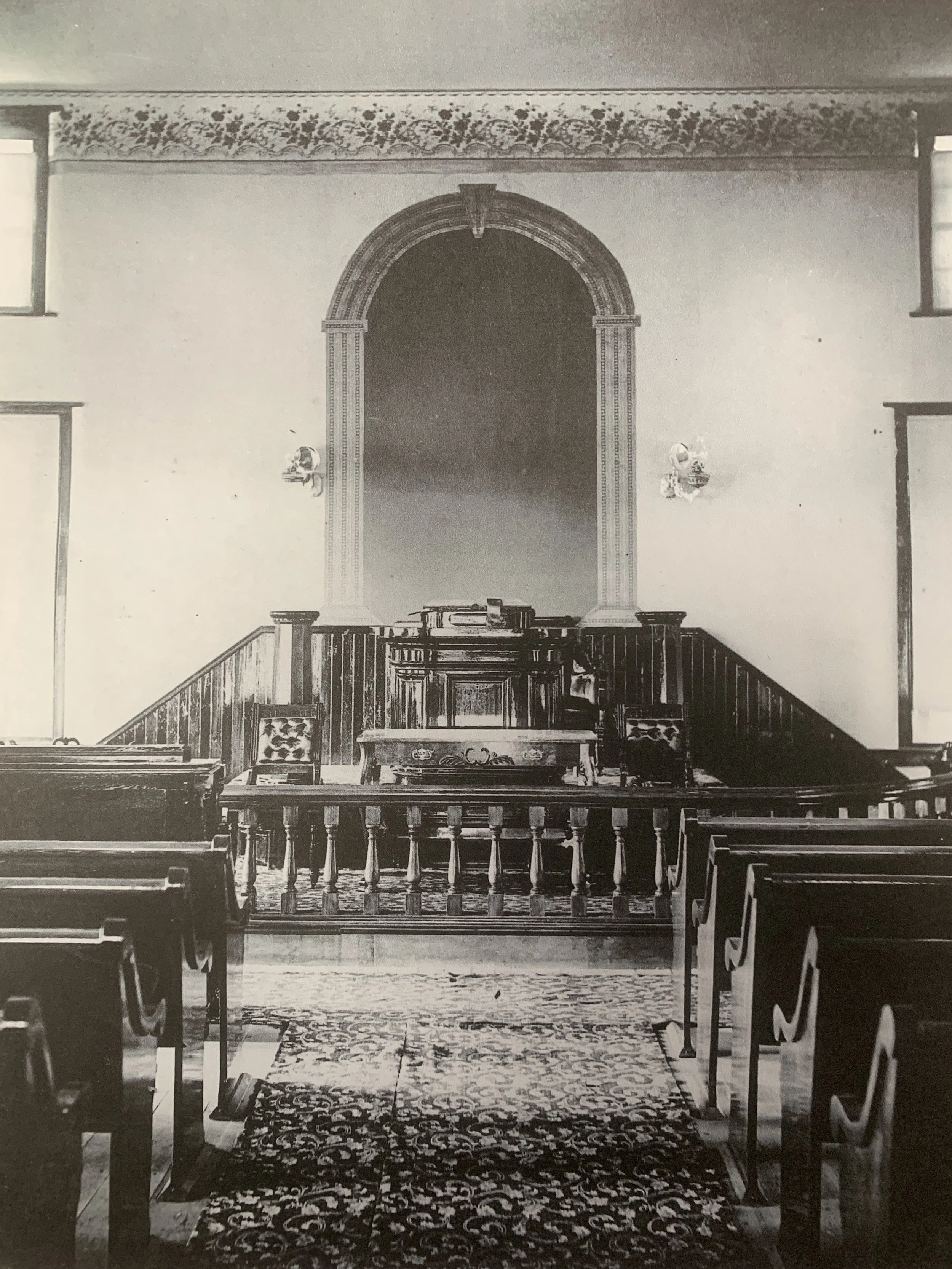
The pulpit in Deep Run West Mennonite Church 1899
The interior of the present church is similar to the one torn down in 1872. The men and women sit on long benches; those for the women are ranged across the room; those for the men are along either side, each successive bench being placed at a slightly higher elevation as they proceed toward the wall. There are rows of pegs suspended from the ceiling and also on the wall to hang their hats upon. On the north end is a vestibule provided with pegs and shelves for the cloaks and bonnets of the women, which they never wear in the audience room but invariably leave them in the vestibule, and old and young, after removing their cloaks and bonnets, put on white lace caps in which they appear in the audience room.
Across the center portion of the south end of the church is a long-elevated pulpit usually occupied by the three ministers and the deacon. The three ministers preach on alternate Sabbaths, and the deacon assists by reading a chapter from the scriptures and making brief remarks, remaining seated. The services have, until recent years, been entirely in German, but English preaching is now conducted to some extent.
On the pulpit is a German Bible printed at Germantown, Pa., by Christopher Saur, in 1743, with heavy back and brass clasps, and two hymn books also in German bearing the imprint of 1800. The congregation is large; people come from miles around to this church, and the services and singing are of a deep spiritual character and very inspiring.
Worship, Interior Arrangement, and Church Life
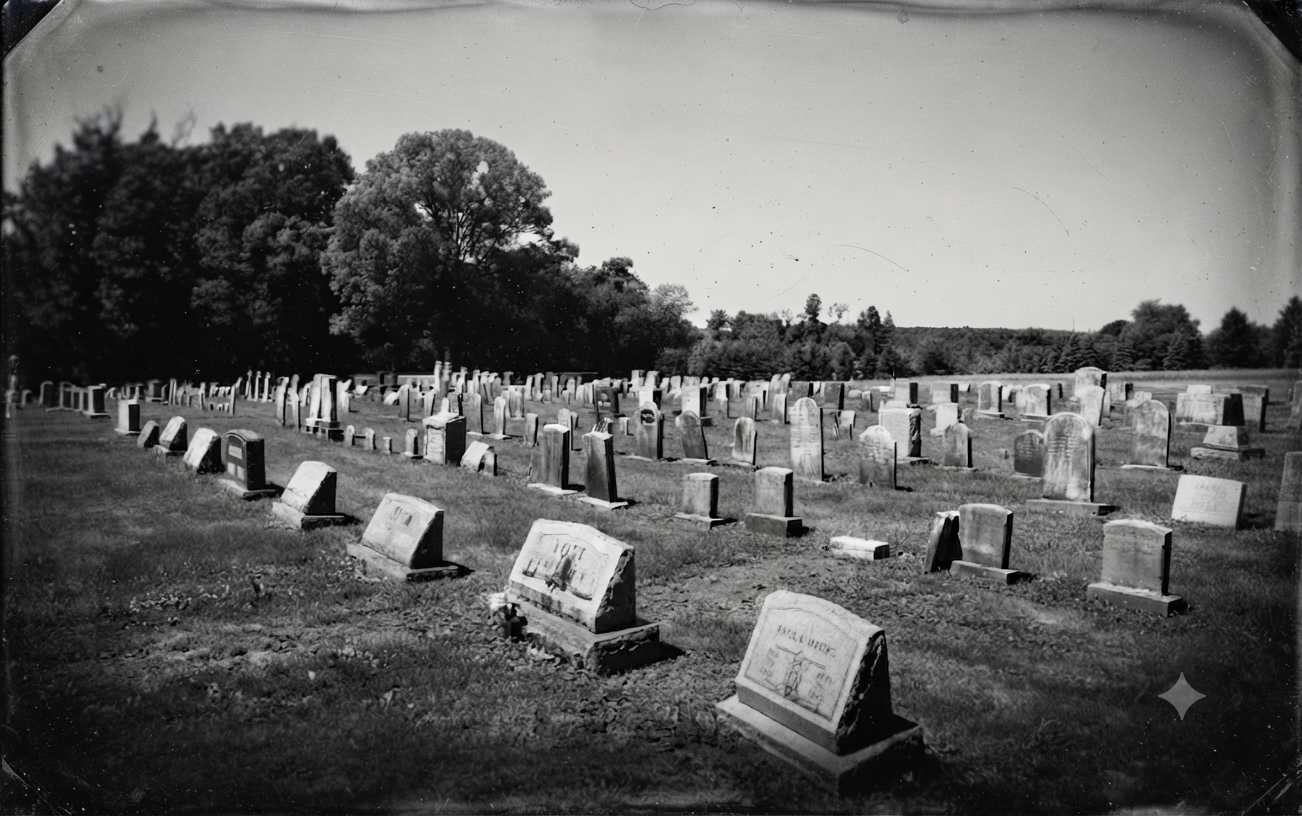
Deep Run West Mennonite Church Cemetery, later years
The Graveyard and Early Families
In the large and well filled graveyard adjoining the church are interred the mortal remains of many pioneer immigrants and their immediate descendants, who left the old world on account of religious persecution, and settled in this, then wilderness, country, enduring all the hardships and privations of pioneer life, clearing the land and tilling the soil, making it to blossom as the rose, creating homes of comfort and plenty. Among the silent resting places of the dead are the names Fretz, Krout, Meyer, Landis, Oberholtzer, Stauffer, Leatherman, Kulp and many others. May their dust quietly rest until Gabriel’s trumpet shall sound to awake the dead, and the Saviour of the world shall descend to claim His own.
The first burial in the new cemetery was in 1856.
The 1847 Division
In 1847, a division that affected several congregations in Eastern Pennsylvania also affected the old, time-honored, and flourishing congregation at Deep Run. The chief cause was members siding with the more progressive views promoted by Rev. John H. Oberholtzer, pastor of Swamp Congregation, a leading member of the progressive party. As a result, those who supported these views organized a new society at Deep Run in 1848.
A meeting of members of the new society was held and a constitution framed, as the basis of a new organization, and on May 15th, 1848, applied to the court of Bucks County for a Charter of Incorporation, which was granted on April 25th, 1849. The corporation was denominated “The Mennonite Society of Deer Run and Plumstead.”
The applicants for the corporation were, viz. Enos Fretz, Joseph Fretz, Mathias Stover, Philip Kratz, John Leatherman, Samuel Autherholt, John Myers, Jr., John Fretz, and Martin Fretz, and were the trustees of the Society. On the 14th day of May 1849, the trustees of the New Society met at the house of Enos Fretz and organized, appointing Mathias Stover, President; John Myers, Secretary, and Joseph S, Fretz, Treasurer.
At this meeting, the following proposal was drawn and agreed upon by the Board, and a committee of two appointed to hand the same to the trustees of the meeting house at Deep Run, viz: "Proposition to the members of the Mennonite Society now occupying the Meeting House and Grounds at Deep Run."
Proposed Use of the Meeting House
1. Each society would use the meeting house on alternate Sabbaths.
2. The burial ground would remain for the joint benefit of both societies, with rents from the property divided equally.
3. The meeting house, lot, and buildings would be sold publicly to the highest bidder, with one-half of the proceeds paid to the society that did not receive the property. The burial ground would be excepted and remain for the joint use of both societies.

The New Meeting House
The members of the Mennonite Congregation at Deep Run declined to entertain the proposition for the alternate use of the meeting house by the New Society, and the latter therefore secured permission to hold preaching services in the Deep Run “English” Presbyterian Church in Bedminster Township until they could get a place of worship of their own.
The new congregation accordingly met on the 16th day of June 1849, at the house of Isaac Fretz in Tinicum Township, at which meeting it was unanimously agreed upon to build a new meeting house at Deep Run, near the Old Meeting House; William Meyers, Enos Fretz and John A. Loux, Esq. were appointed a committee to purchase a lot of ground upon which the building and graveyard should be erected, for which a subscription was drawn and money subscribed for advancing.
By resolution at this meeting it was further agreed that about 21/2 acres of land be bought from Henry Meyers near the old meeting house at Deep Run, on which to build a new church of convenient size, and to be built of brick. At a meeting of the trustees at the house of John Fretz on July 2nd, 1849, William Meyers and Joseph S. Fretz were appointed to superintend the building of the church, and a meeting was called and held on the church ground on Saturday, July 7th, to contract the building to the lowest bidder.
Samuel Keller and Jacob Leatherman were appointed to do the carpenter work, and Joel Rosenberger to do the mason work at one dollar per day and board found. At a meeting of the trustees held on November 10th, 1849, it was resolved to consecrate the new meeting house on the first and second days of December, 1849. The trustees were elected to serve the church on the 24th day of December, 1849, viz. Mathias Stover, John Myers, Jr., John Leatherman, Joseph S. Fretz, Philip Kratz, Joseph F. Myers, Jacob Fretz, John Fretz, William Meyers.
Ministry, Leadership, and Later Changes
There is no record at hand of the ministers, but it is known that Martin Fretz was the first minister and served the church in that capacity for about four years. He later severed his connection with the church as the result of a disturbance occasioned by the deacon Samuel Authorholt, who, it was claimed, made excessive charges for material which he furnished for the church; in which controversy, all the ministers sided with the deacon and the other members of the congregation against him.
In the spring of 1854, Martin Fretz removed to Northern New Jersey, where he connected himself with the Presbyterian Church of which he was later ordained a Ruling Elder at Stillwater, NJ. He died very suddenly in bed of heart disease on the night of July 13, 1882.
Other ministers of the church have been, viz Samuel Weinberger, Joseph D. Rosenberger, Enos F. Loux. From the close of the ministry of Enos F. Loux, the church had no regular ministers until 1872, but was supplied with preachers by the following ministers. viz. John H. Oberholtzer, Joseph Schantz, Christian Clemmer, Samuel Moyer, Moses H. Godshall. In 1872, Jacob S. Moyer was called to the pastorate and served until 1883. The present pastor, Rev. Allen M. Fretz, was called in 1833, and was ordained on October the 13th of that year, and has served the church very acceptably ever since.
The deacons from the founding of the church to the present time are, viz. Samuel Autherholt, William Meyers, who served for 40 years, Aaron M. Rickert, and Samuel W Gross.

Martin Fretz, First Minister, New Mennonite Church at Deep Run, 1849-1851
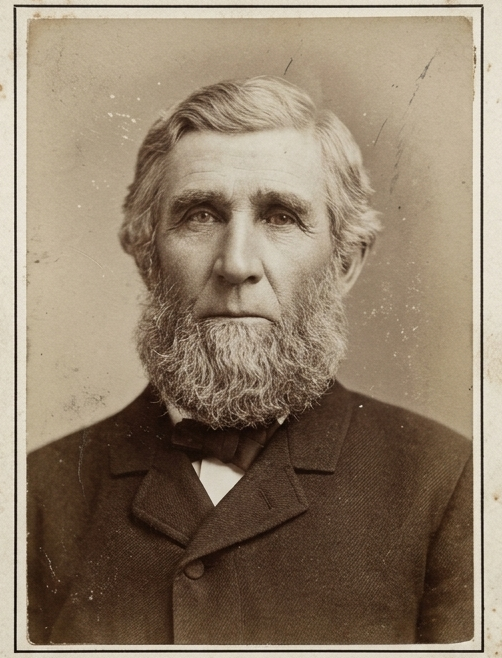
Rev. Jacob S. Moyer, Pastor 1871-1883
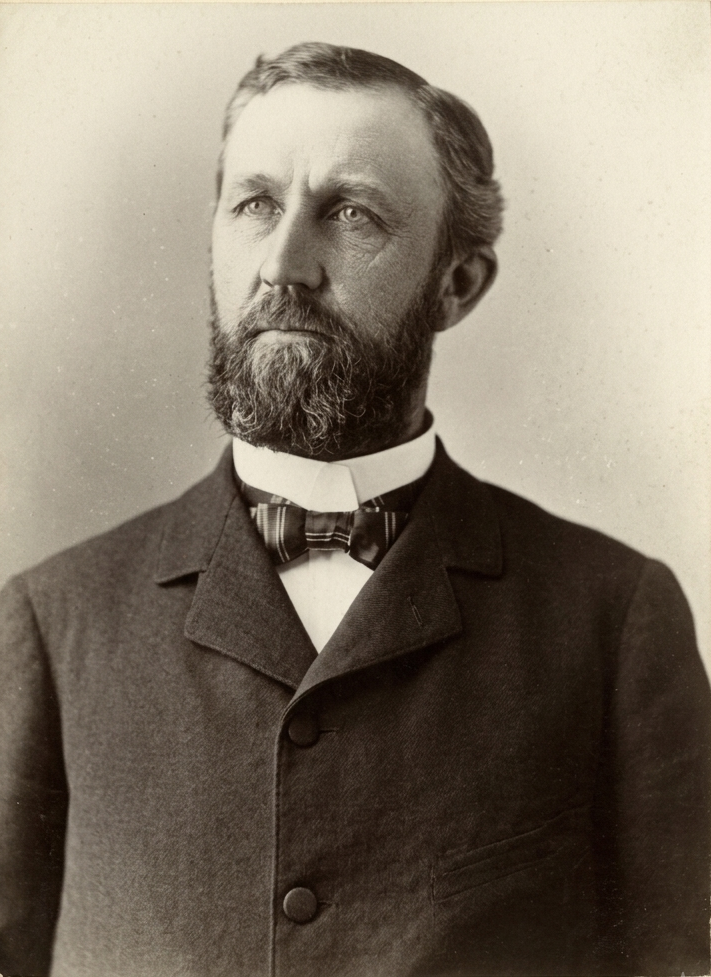
Allen M. Fretz, Pastor 1883-1940 son of the congregation starts 60-year ministry
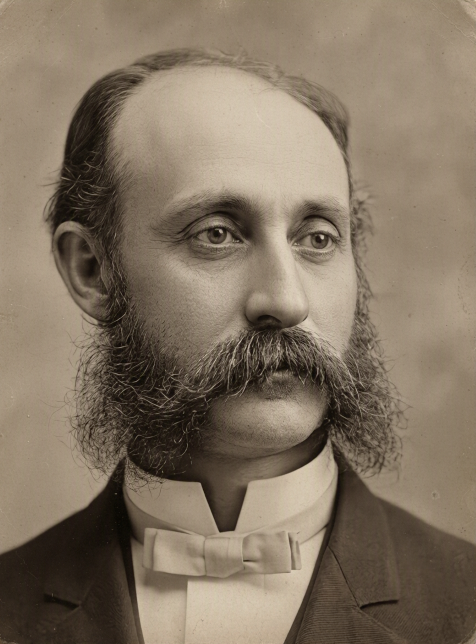
Rev. A. J. Fretz
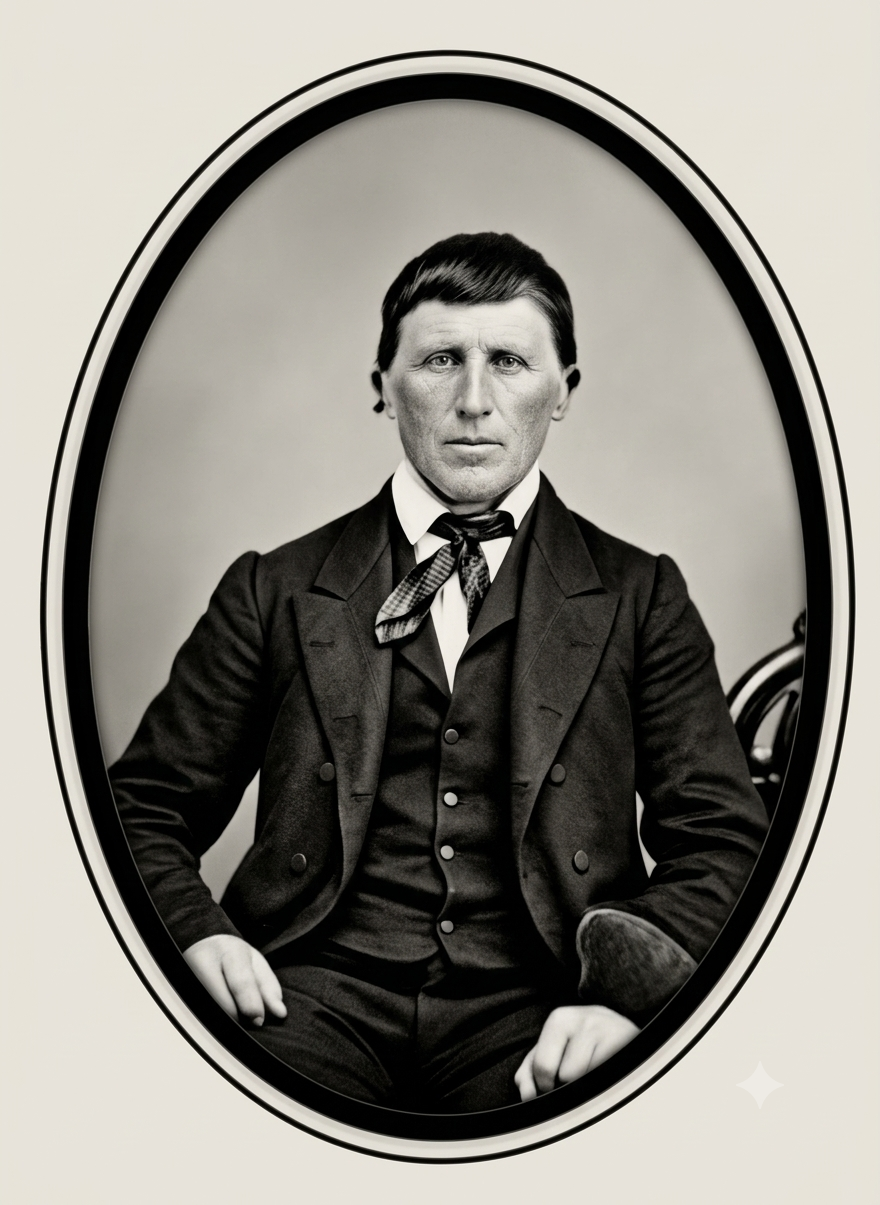
Joseph F. Myers, Trustee
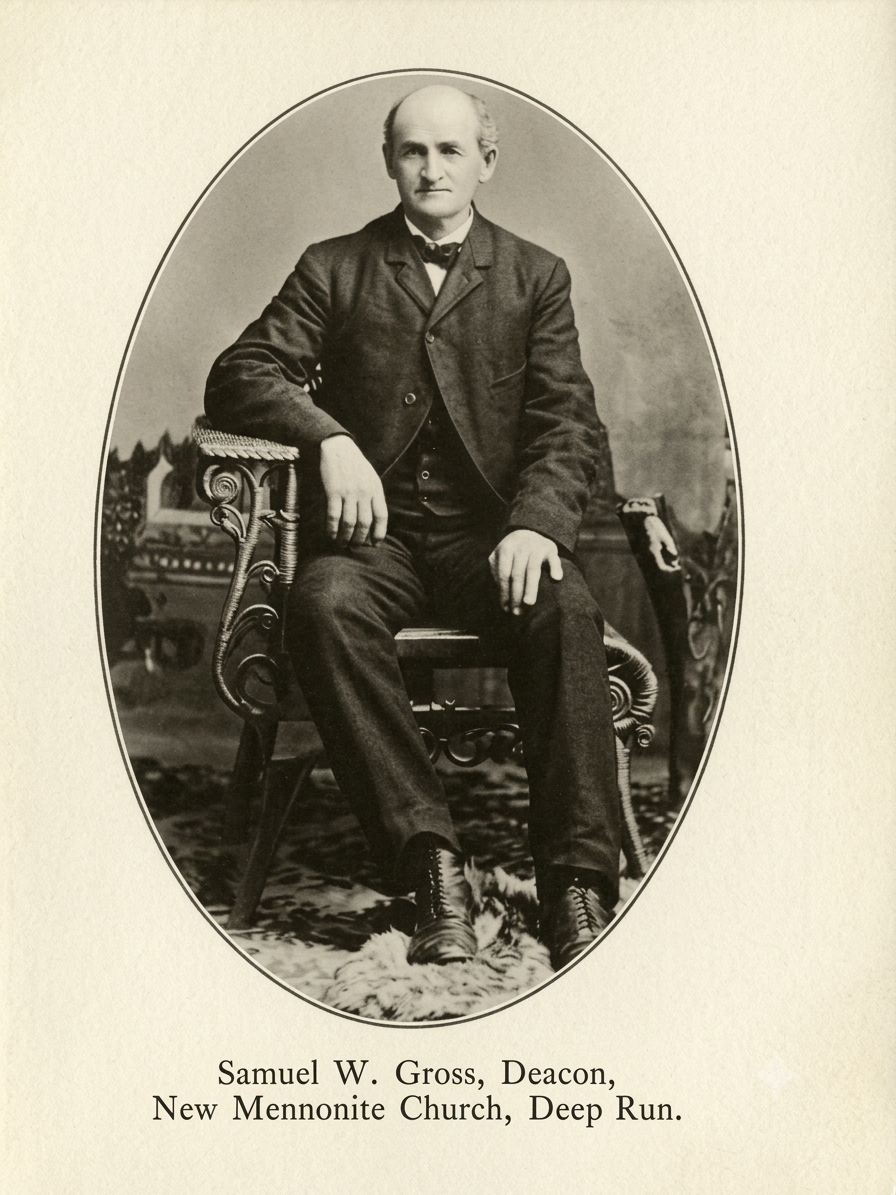
Samuel W. Gross, Deacon
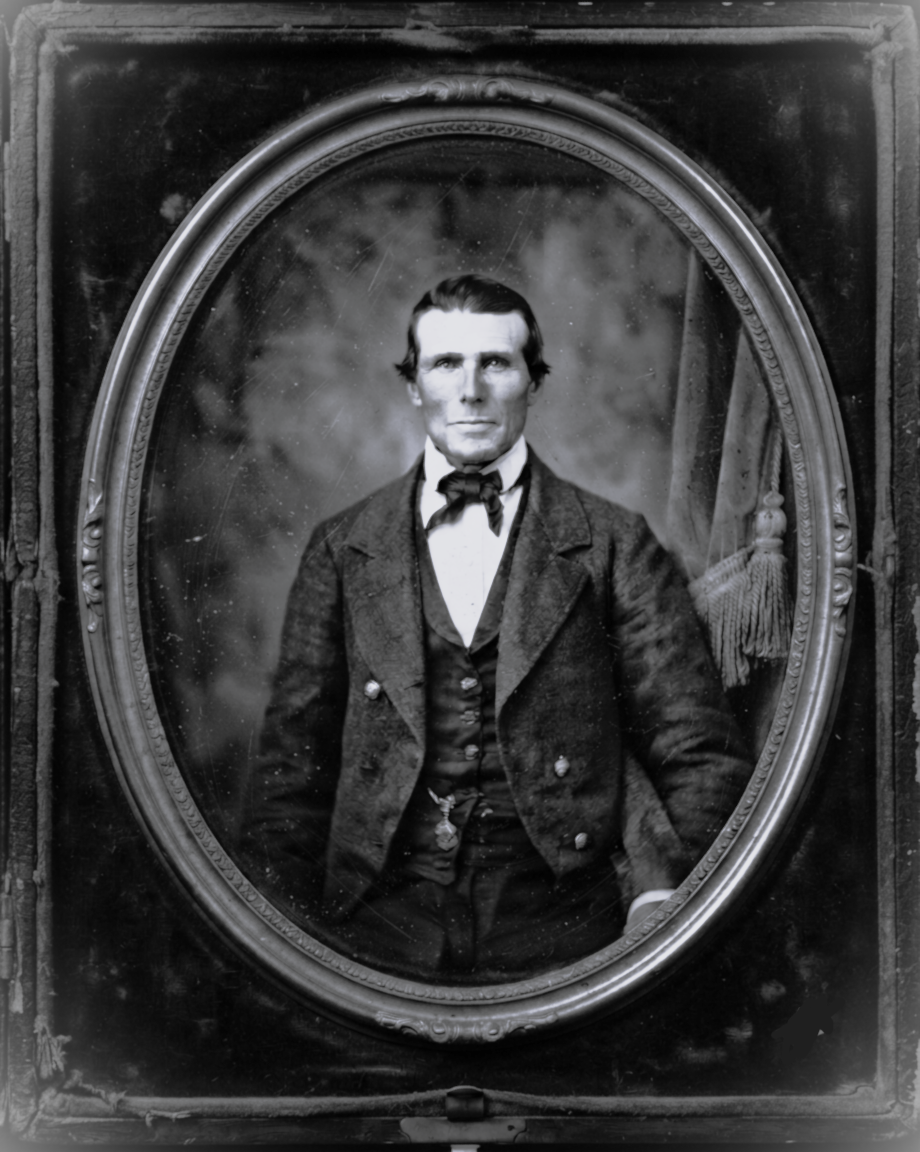
Isaac K. Fretz, Leader of Singing
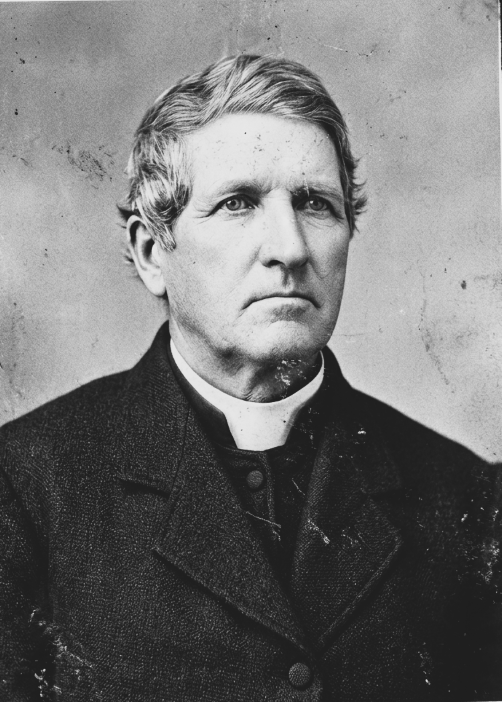
Rev. John H. Oberholtzer, 1847 leads reform in Franconia Mennonite Church
Source and Transcription Note
This page is based on the 1912 historical account by Rev. A. J. Fretz. The formatting has been adapted for web readability with headings, a timeline, and clearer section breaks while preserving the historical narrative and original names as closely as possible.